Inclusi-AI Vasyan: Mental Well-being Support System
Overview
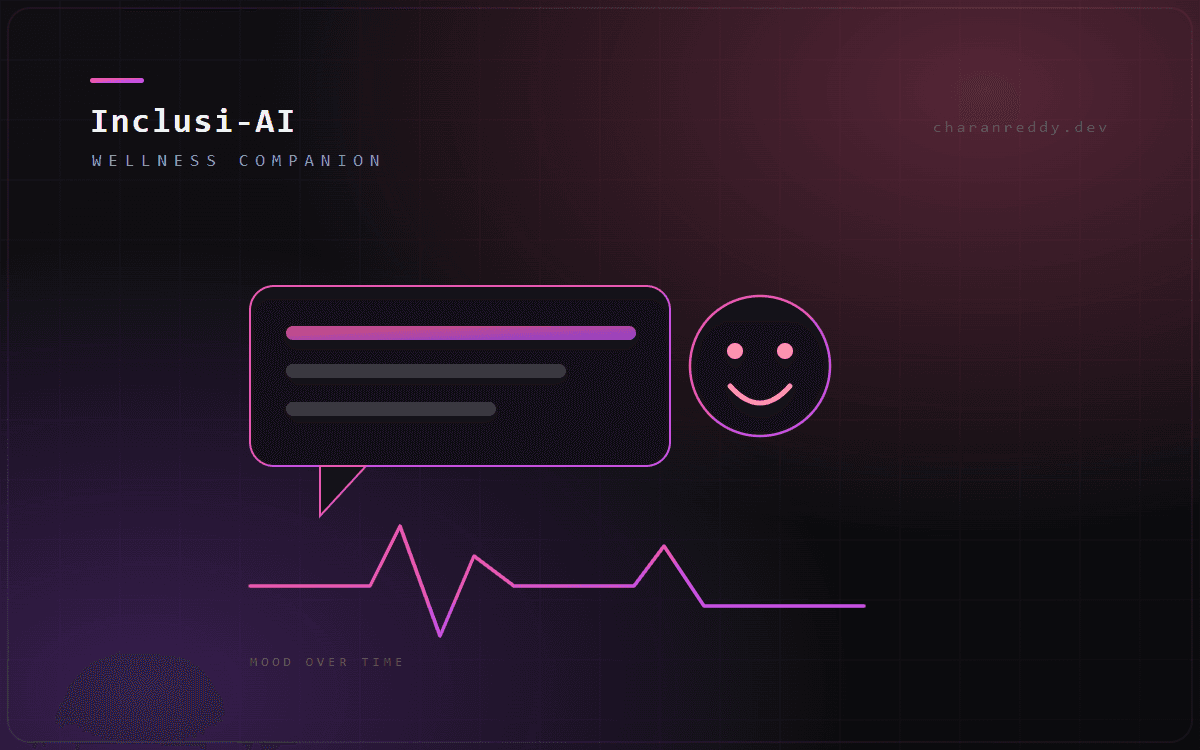
Inclusi-AI Vasyan started from a simple question: can a chatbot feel supportive without pretending to be a therapist? Built during the Microsoft Learn Student Ambassadors Project Cohort, it pairs a GPT-3 conversational companion with private mood tracking, so someone can talk, log how they feel, and watch their own patterns emerge over time — all behind secure cloud infrastructure.
Tech Stack
Challenges
- Making AI conversations feel genuinely empathetic rather than canned or clinical.
- Storing something as sensitive as mood data privately and securely.
- Standing up a real-time front-end against a secure backend, end to end.
- Deploying and keeping it running on Azure with a clean CI/CD flow.
Solution
A Flask API backs a Next.js front-end, with GPT-3 generating responses and careful prompt design steering them toward warmth without overstepping into advice. Mood entries live in Azure PostgreSQL, deployed via Azure App Service. The product nudges gently — check in, reflect, and see your trend — rather than diagnosing.
Outcome
The companion tested well for feeling approachable instead of robotic, and the mood-tracking loop gave people something a one-off chat can't: a view of themselves over time. It became a small proof that "empathetic" is a design problem as much as a model problem.
What I'd do differently
I'd be far more deliberate about safety. A wellness chatbot needs explicit crisis-handling — detecting concerning messages and routing to real human resources — plus clearer "I'm not a clinician" framing. I'd also move from GPT-3 to a newer, more steerable model and add a small evaluation set to keep the tone in check.